

We know that caring for a child with type 1 diabetes (T1D) can be incredibly challenging. We also know that caregivers of children with T1D experience high levels of distress and anxiety. We are looking to better understand what this experience is l…
Continuous glucose monitoring systems are used in therapeutic decisions for diabetes management, however, the impact of body composition on CGM accuracy is not known. Body composition variables were collected in an observational study designed to de…
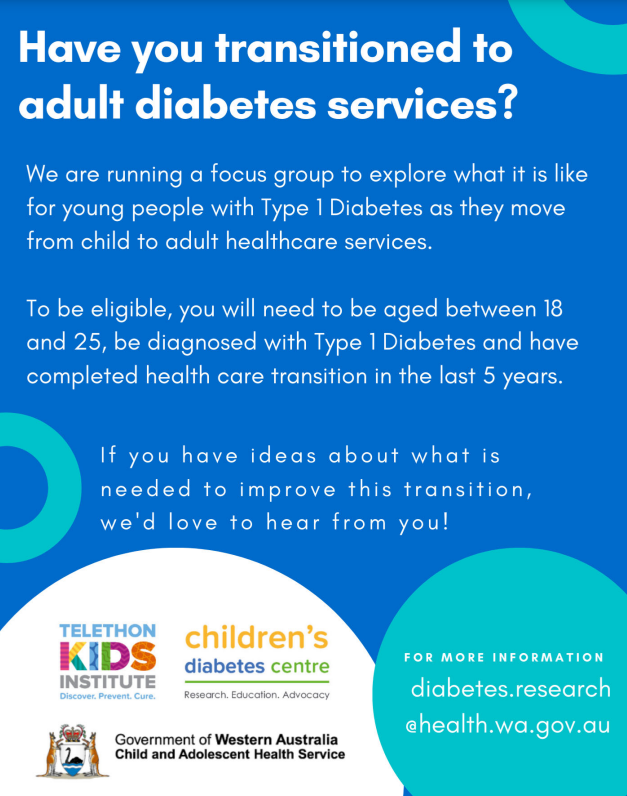

Managing the care regimen for Type 1 Diabetes is challenging for emerging adults, as they take on greater responsibility for self-management. A diverse range of models of care have been implemented to improve safety and quality of care during transi…
A 28-year-old man with congenital hypogonadotropic hypogonadism (CHH) was found to be heterozygous for the GNRH1 p.R31C mutation, reported in the literature as pathogenic and dominant. The same mutation was found in his son at birth, but the testing…
Type 1 diabetes is well-recognised as a continuum heralded by the development of islet autoantibodies, progression to islet autoimmunity causing beta cell destruction, culminating in insulin deficiency and clinical disease. Abnormalities of glucose…
In Australia, access to insulin pump therapy for children with type 1 diabetes is predominantly restricted to families with private health insurance. In an attempt to improve equity, additional subsidised pathways exist which provide pumps to famili…